


Heat can significantly affect your trees during summer, especially in Franklin, NC. To ensure the health of your trees, you should look for signs such as leaf scorching, which manifests as browning edges, and premature leaf drop, where leaves fall off before the season’s end. Additionally, pay attention to stunted growth or bark that appears peeling and cracking, both indicative of stress. By being vigilant about these symptoms, you can take proactive steps to help your trees withstand the summer heat.
Key Takeaways:
- Leaf discoloration: Trees may exhibit yellowing or browning leaves, often starting from the edges or tips, indicating they struggle against heat.
- Wilting foliage: Leaves will become droopy or wilted due to inadequate moisture levels, signaling distress from high temperatures.
- Reduced growth: A noticeable slowdown in new growth or smaller leaf size can signify that the tree prioritizes survival over growth during extreme heat.
- Leaf drop: Early leaf drop, where trees shed leaves prematurely, is a defensive mechanism to conserve water during hot conditions.
- Cracked bark: Shallow cracks or splits in the bark can develop as the tree struggles to cope with fluctuating temperatures and moisture loss.
Understanding Heat Stress in Trees
Definition of Heat Stress
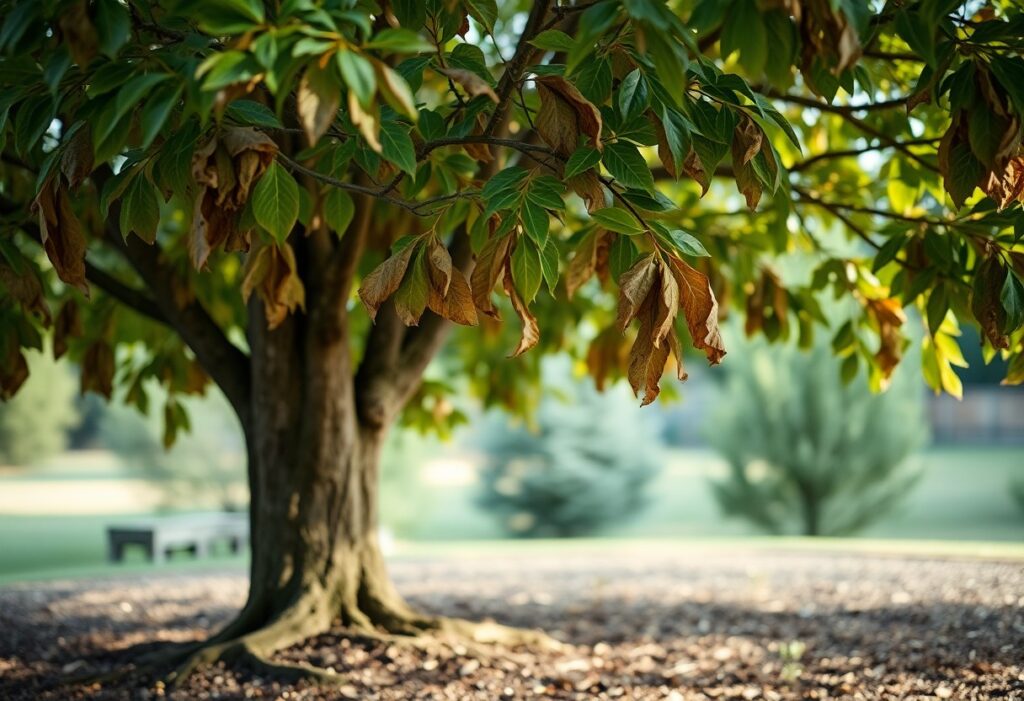
Your understanding of heat stress in trees is crucial for ensuring their health and longevity, especially during the sweltering summer months. Heat stress occurs when trees cannot effectively manage their water loss due to excessive temperatures, leading to dehydration and reduced physiological function. This stress is both a response to high temperatures and a result of environmental factors like low humidity and inadequate soil moisture, causing the tree to struggle to maintain its vital functions.
Understanding the signs of heat stress is vital for timely intervention. When a tree is subjected to prolonged periods of high temperatures without sufficient water, it may exhibit symptoms such as wilting leaves, leaf scorch, or stunted growth. These signs indicate that your tree is struggling to cope with its environment and may need additional care and support to recover.
Common Tree Species Affected
Stress from heat can impact various tree species differentially based on their adaptability to local climate conditions. Certain trees, like maples, oaks, and birches, are particularly susceptible to heat stress due to their higher moisture requirements. These species may show signs of distress sooner than more resilient varieties, indicating they struggle to thrive in extreme temperatures.
And while you may have a mix of tree species in your yard, it’s vital to note that deciduous trees are generally more at risk during summer heat waves. Evergreen trees, while hardy, can also suffer from heat stress, especially if they are already weakened by pests or diseases. Paying close attention to the unique needs of these trees can help you ensure they remain healthy and vibrant throughout the summer months. By understanding which tree species are vulnerable, you can take proactive steps to mitigate heat stress and promote their well-being.
Physical Signs of Heat Stress
A range of visible indicators can reveal if your tree is suffering from the oppressive heat of summer in Franklin, NC. By being vigilant and observant, you can identify these signs early, allowing you to take action to protect your trees. Healthy trees usually exhibit vibrant foliage and robust growth, but these characteristics can rapidly change when heat stress occurs, leaving you worried about their well-being.
Leaf Discoloration
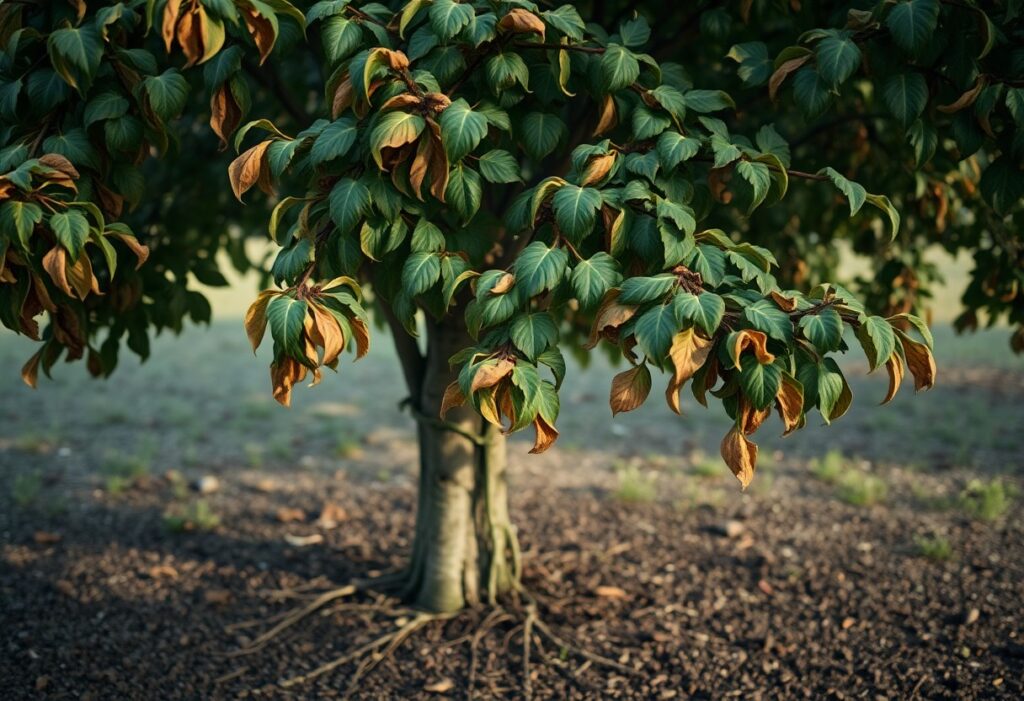
Above all, one of the most noticeable signs of heat stress is leaf discoloration. If the leaves on your tree are turning yellow, brown, or scorched, it likely indicates that your tree is struggling to cope with the heat. You may also notice that the leaf edges are browning first, suggesting they receive less moisture than needed. This discoloration not only detracts from the aesthetic appeal of your garden but can also hinder the tree’s ability to photosynthesize, further compromising its health.
Leaf Curl and Drop
A drop in moisture and nutrients can lead to another serious sign of heat stress: tree leaves curling and dropping. When your tree experiences high temperatures, it may respond by curling its leaves inward to minimize exposure and conservatively preserve moisture. Additionally, your tree may start shedding its leaves prematurely if the stress continues. This leads to a significant loss of foliage and can deprive your tree of its ability to perform vital functions like photosynthesis, impacting its overall health.
Leaf curl indicates that your tree is attempting to manage its water retention, but if this sign is accompanied by significant leaf drop, it may suggest that the stress levels are reaching a dangerous point. You should act quickly to address these issues, as prolonged heat stress can jeopardize your tree’s survival. Keep the soil adequately moist, add mulch around the base to help retain moisture, and consider shade solutions to protect it from the blazing sun.
Behavioral Indicators
All tree species exhibit certain behavioral indicators when they are experiencing summer heat stress. These signs can give you valuable information about the health of your trees, enabling you to take necessary precautions to support their vitality. Recognizing these indicators early can help mitigate further damage and encourage recovery. Paying close attention to these behaviors is important in maintaining your tree’s long-term health, especially during the hotter months in Franklin, NC.
Stunted Growth
An important indicator of heat stress in trees is stunted growth. If you notice that your trees are not producing new leaves or branches at their usual rate, this could signify that they are struggling to cope with elevated temperatures. Stunted growth may be accompanied by yellowing leaves, indicating that your trees are not receiving adequate moisture and nutrients. If you have substantially smaller trees than their surrounding counterparts, particularly those of the same species, be vigilant, as this may also reflect heat-induced stress.
Increased Pest Activity
Behind the scenes of heat-stressed trees, you may also observe increased pest activity. Trees that are already weakened by high temperatures become more vulnerable to pest infestations as their natural defenses weaken. You might notice unusual activity, such as a sudden increase in aphids, borers, or other harmful insects that target stressed trees. This could lead to a vicious cycle where the pests cause even more stress on the tree.
The connection between summer heat stress and pest activity can significantly impact your trees’ overall health. When trees are compromised by heat, their ability to produce defenses against pests diminishes, allowing for rapid infestations that can further weaken the tree. Monitoring for signs of increased pest activity, such as small holes in leaves or the presence of sticky residue from sap-sucking insects, is important. Taking proactive measures, such as ensuring adequate watering and considering organic pest control options, can help safeguard your trees against these challenges. This way, you promote a thriving environment that can withstand the summer heat effectively.
Environmental Factors Contributing to Heat Stress
Not only can high temperatures affect trees, but several environmental factors play a significant role in causing heat stress. Understanding these factors can help you identify why your tree may struggle during summer. Some of these elements include:
- Soil moisture
- Urban heat islands
- Exposure to wind
- Pollution levels
- Tree species
Any of these environmental factors, or a combination of them, can severely impact your tree’s health. Therefore, it is imperative to monitor these influences regularly to minimize the risk of summer heat stress.
Soil Moisture Levels
Any tree’s ability to cope with heat heavily depends on its access to soil moisture. Insufficient moisture can lead to dehydration, making it difficult for trees to maintain their necessary physiological processes. You may notice that trees with dry roots exhibit signs of wilting leaves, which clearly indicates that they are not receiving enough water to stay healthy.
During the hotter months, you should monitor soil moisture levels in Franklin, NC. Mulching around your trees can help retain moisture, and you may consider using irrigation systems when rainfall is scarce. Addressing these soil moisture issues proactively can significantly assist in reducing heat stress symptoms in your trees.
Management Practices for Affected Trees
Many trees in Franklin, NC, can struggle under the relentless summer heat, but you can implement effective management practices to support their recovery and resilience. By proactively caring for your trees, you can help them mitigate the stress caused by high temperatures. This includes proper watering techniques, mulching, and providing shade, all of which can enhance the health of your trees during challenging weather conditions.
Watering Techniques
Around the hot months, it’s crucial to maintain a consistent watering regimen to keep your trees hydrated. You should focus on deep watering your trees, encouraging roots to grow deeper into the soil, making them more resilient to drought conditions. Aim for about 1 inch of water per week through rainfall or irrigation, and adjust accordingly based on weather patterns. Deep watering should be performed infrequently but thoroughly, ensuring moisture reaches the root zone.
Mulching and Shade Provision
Besides adequate watering, using mulch around the base of your trees is an effective way to combat heat stress. Mulch retains moisture and regulates soil temperature, keeping the roots cool during scorching days. When applying mulch, aim for a 2- to 4-inch layer, ensuring it does not touch the tree trunk to prevent rot. You may also consider planting shade-providing plants nearby or using temporary structures like shade cloth to shield young trees from exposure to direct sun.
In addition to retaining moisture, mulch acts as a barrier against weed growth, which can compete for the limited water resources your trees need during summer. This practice also enhances overall soil quality as it breaks down over time, providing nutrients to the tree. Providing shade through natural or artificial means offers another layer of protection, safeguarding trees from extreme sunlight and helping them maintain a healthy growth rate as they navigate the challenges of summer heat.
Preventative Measures
Keep your trees thriving through the summer months by taking appropriate preventive measures. Even in an area like Franklin, NC, where the landscape is incredibly diverse, some trees are more prone to heat stress than others. By educating yourself on species selection, you can ensure that the trees you choose for your yard are well-suited to withstand high temperatures and dry conditions.
Species Selection
Behind every thriving landscape lies the importance of selecting the right tree species for your specific climate. Trees such as the sugar maple or Eastern red cedar often demonstrate better heat stress resilience than more delicate varieties. Doing thorough research and consulting local experts can help you pick trees that will flourish in the long hours of summer sunlight while needing less water.
Proper Placement and Care
Care for your trees extends beyond choosing the right species; proper placement is important to their well-being. Ensure that you plant your trees strategically to allow for adequate sun exposure without overwhelming them. Opt for areas with some natural shade during the hottest parts of the day, which can help reduce heat stress. Keeping adequate spacing between trees will improve air circulation and minimize nutrient competition.
Felix Tree Expert, LLC is a fully insured and licensed tree service company in Franklin, NC. We offer extensive experience in tree removal, tree cutting, tree trimming, stump grinding, lot clearing, and view clearing. You can easily schedule a visit to your home or business: simply call us, and we’ll provide a free onsite estimate. Additionally, we can offer consultations on protecting your trees while meeting your yard care needs.