


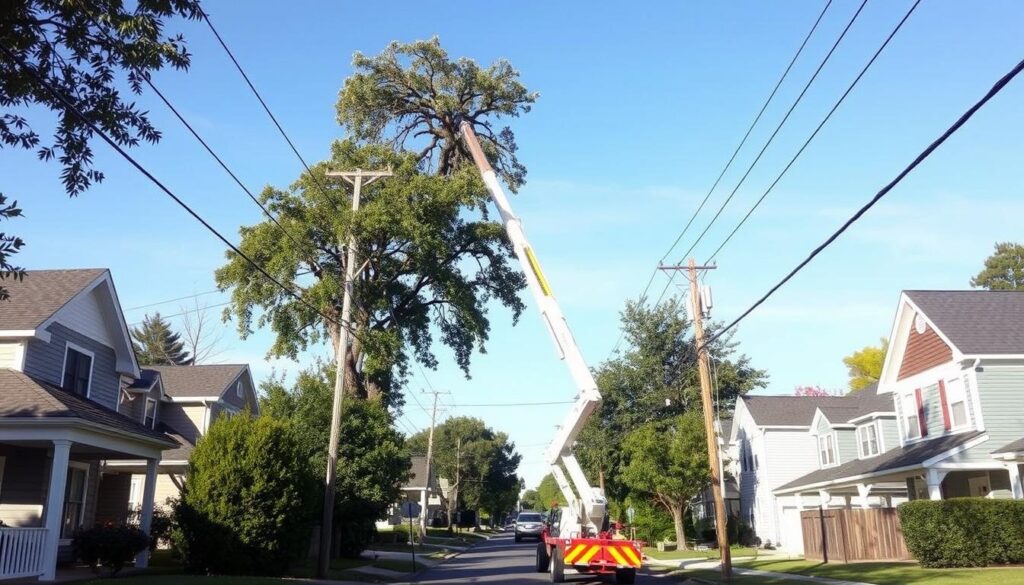
Setting up a mobile tree crane in Glenville, North Carolina’s residential areas is tricky. The narrow streets and many overhead obstructions make it hard. Arborists and crane operators must be very careful to do the job safely and well.
Key Takeaways
- Navigating narrow residential streets and coordinating traffic control measures
- Assessing street width and overhead obstructions to determine crane accessibility
- Establishing exclusion zones to ensure the safety of nearby residents and property
- Optimizing limited workspace to position the crane and access the target tree
- Collaborating closely with local authorities and community stakeholders for a successful project
Navigating Narrow Residential Streets
Using a mobile tree crane in Glenville’s homes is tricky because of the narrow streets. Crane operators face the challenge of residential obstructions. They need to check the street width and look out for things like cars, trees, or power lines.
Assessing Street Width and Obstructions
Before setting up the crane, operators must check the street access and space. They determine if the crane can work there and if they need to change plans. It’s important to avoid traffic control problems and damage to nearby buildings.
Coordinating Traffic Control Measures
Good traffic control is key for safety. Crane operators must work with local authorities. They set up road closures, detours, and signs to keep traffic moving.
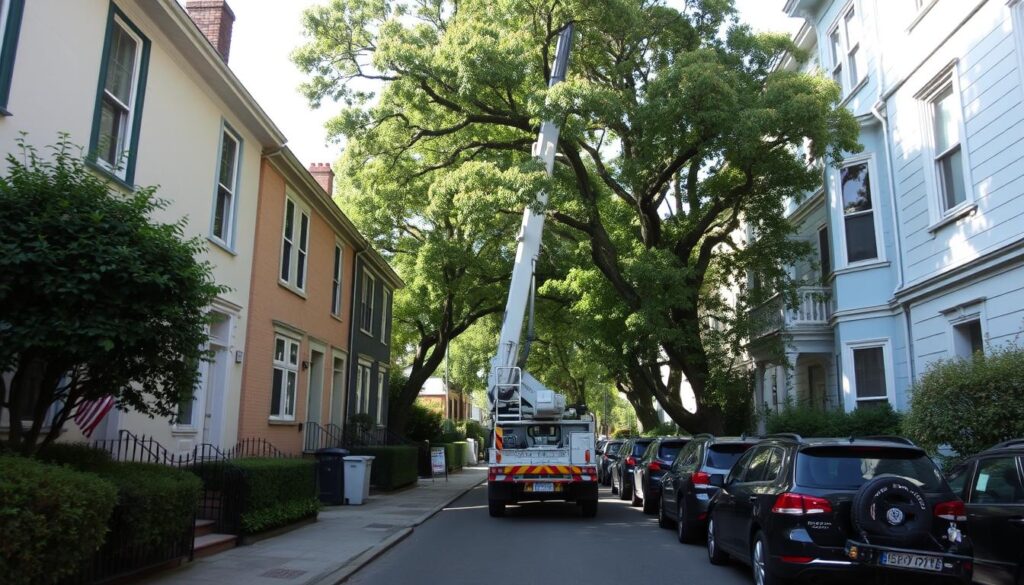
By carefully checking the narrow streets and residential obstructions and working with local authorities, crane operators can safely use mobile tree cranes in Glenville’s homes.
Ensuring Safety in Populated Areas
Mobile tree crane operations in Glenville, North Carolina, must focus on safety. Homes, pedestrians, and bystanders are close by. Crane operators must set up exclusion zones to protect the public from falling debris or crane movements.
Working with local authorities and talking to residents is key. This ensures safety in populated areas during residential crane operations. By teaming up with the community, crane operators can reduce disruptions and risks. Don’t overlook this remarkable article.
Establishing Exclusion Zones
Setting up exclusion zones is vital for safety in residential areas. These zones keep people away from falling debris or other dangers. Crane operators must clearly mark and watch these zones to protect the public and keep areas safe.
- Find the right size and spot for the exclusion zone based on the crane’s reach and the work.
- Use signs, barricades, or other ways to show where the exclusion zone is and keep people out.
- Keep an eye on the exclusion zone and change it if needed to keep everyone safe.
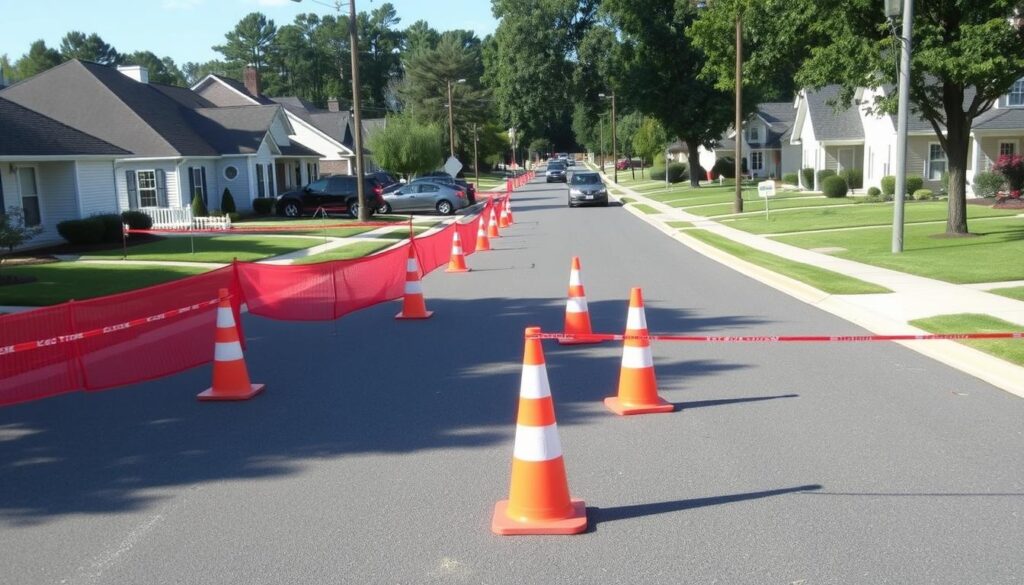
By creating and enforcing exclusion zones, crane operators can lower risks in residential crane operations. This makes a safe place for the crew and the community around them.
Overcoming Limited Workspace
In Glenville’s residential areas, the small spaces pose a big challenge for mobile tree crane work. Crane operators must plan carefully to fit their equipment into tight spots. They also need to consider where to put support vehicles and other gear.
It’s not easy to move a big crane through narrow streets. Operators have to be very careful and precise. They check the street width, look for obstacles, and work with local authorities to set up the crane safely.
Despite the hurdles, the team at ABC Tree Service has found ways to succeed. They use their experience and smart equipment planning to get the job done right. They make sure the local community stays safe and happy.
Felix Tree Expert, LLC is a fully licensed and insured tree service company in Glenville, NC. We have extensive experience in tree removal, tree trimming, tree cutting, stump grinding, lot clearing, and view clearing. Our services include free onsite estimates, and all you need to do is give us a call to schedule a visit to your home or business. We also provide consultations on how to protect your trees while meeting your yard care needs.