

Proper tree maintenance and care are essential for the health and longevity of your trees. Knowing how to determine which branches to thin during tree trimming in Franklin, NC, is crucial for maintaining the structural integrity of your trees.
Key Takeaways:
- Thinning branches is an important aspect of tree care and pruning.
- Assessing the tree’s overall health and structure is crucial in identifying branches that require thinning.
- Using proper techniques and tools during tree trimming is essential to maintain tree health and aesthetics.
- Regular evaluation of the results and ongoing tree care are necessary to ensure the tree’s health.
- Consider seeking expert assistance from a professional arborist for larger or more complex trees.
Understanding the Importance of Thinning Branches
When it comes to tree care and pruning, thinning branches is a crucial step in maintaining overall tree health. By selectively removing certain branches, better air circulation is promoted, weight on branches and limbs is reduced, and the tree’s health is maintained.
This process can be done during tree trimming and should be done strategically. Thinning branches will help maintain the natural shape and balance of the tree, as well as ensure it stays aesthetically pleasing.
One of the most important benefits of thinning branches is that it reduces the risk of branch failure. Thinning out the branches promotes better air movement, which can prevent moisture accumulation and the spread of diseases. When moisture gets trapped in the canopy, it can lead to fungal growth and other diseases that can damage or even kill the tree.
Tip: Not all branches have to be removed during thinning. It’s important to consult with a tree care professional or arborist to determine which branches should be removed to achieve the desired results.
Assessing the Tree for Thinning Opportunities
To determine which branches to thin during tree trimming, a systematic approach is necessary. Proper evaluation of the tree’s overall health and balance is crucial to deciding which branches to remove.
The first step is to identify any branches that are dead, diseased, or damaged, as those should be the first to be thinned. These branches can often be identified by their lack of leaves or branches that appear to be decaying.
Next, consider the overall structure and shape of the tree. Look for branches that are crossing, competing, or overcrowding. These branches can disrupt the balance of the tree and prevent optimal growth. By selectively removing these branches, the tree can maintain a natural form while promoting better airflow and light exposure to the remaining branches.
As you evaluate the tree, keep in mind the tree pruning techniques that will be applied during trimming. Thinning out too many branches in one area can create an imbalance that can lead to the loss of the tree’s overall shape. Be strategic in your choices, and consider both the aesthetic and health benefits of each decision.
By assessing the tree for thinning opportunities and applying the appropriate techniques during tree trimming, you can ensure that your tree’s health and longevity are maintained.
Applying Thinning Techniques during Tree Trimming
Now that you have identified the branches that require thinning, it’s time to apply the correct techniques during tree trimming. Proper thinning will improve the air circulation within the canopy, reduce the weight on branches and limbs, and maintain the health of your trees.
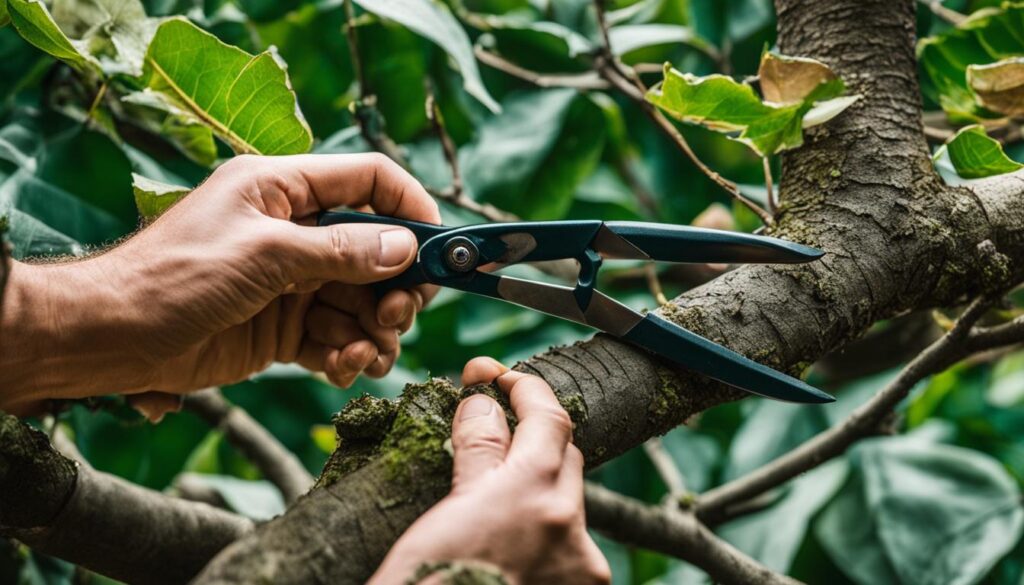
Use sharp and clean tools to make clean cuts, removing the entire branch without leaving stubs. This reduces the risk of bark tearing or the onset of decay. Hold the pruning saw at a tight angle in the direction of growth and cut just outside the branch collar, flush with the bark. Avoid cutting too close to the stem, which may affect branch stability.
Maintain the natural shape and form of the tree while thinning branches strategically to maintain balance and aesthetics. Start by removing dead or broken branches, and then turn your attention to any crossing, rubbing, or competing branches. Remove only the branches that are too close together, leaving enough space to minimize future issues.
Common Thin and Remove Practices
| Branch Type | Technique |
|---|---|
| Dead, Broken, or Diseased Branches | Clean cut at the base, just outside the branch collar. |
| Crossing, Rubbing or Competing Branches | Remove only the branches too close together to maintain balance. |
| Water Sprouts | Remove at the base, below the growth originating point. |
| Co-dominant Leaders | Remove one leader completely and trim the other back to a secondary branch. |
| Low-lying Branches | Trim or thin them entirely if obstruct pathways, pose a safety risk, or adversely impact the canopy. |
Following these techniques will ensure that you are trimming and thinning the branches optimally for the health of your tree while maintaining its shape and form.
Evaluating the Results and Ongoing Tree Care
Now that you have thinned the branches during tree trimming, it’s essential to evaluate the results. Regularly monitor the tree’s health and growth to determine if further thinning or pruning is necessary. This ongoing tree care is critical for maintaining the health and vitality of your trees.
Pay close attention to the tree’s leaves and branches, looking for signs of disease or damage. If you notice any issues, take immediate action by contacting a professional arborist. Regular inspections, proper watering, and fertilization are also essential elements of ongoing tree maintenance.
Remember that proper tree care is an investment in the long-term health and beauty of your trees. By taking the time to evaluate the results and providing ongoing care, you can help ensure that your trees thrive for years to come. Gain deeper insights into What Are the Signs That a Tree is Hazardous and Requires Immediate Removal.
Seeking Professional Assistance for Tree Trimming
While this guide has provided you with valuable information on how to determine which branches to thin during tree trimming, there may be instances where seeking professional assistance is necessary.
Expert tree care requires in-depth knowledge about tree pruning techniques, which tools to use, and how to ensure the safety of both the tree and surrounding areas. Hiring a professional arborist for tree trimming ensures that the job is done correctly and that the health and longevity of your trees are maintained.
Professional arborists have the experience and expertise needed to handle complex or large trees safely and efficiently. They can help you evaluate your trees’ condition and recommend the best course of action, whether it’s thinning branches, removing dead wood, or pruning to improve the tree’s overall health and appearance.
By seeking professional assistance for your tree trimming needs, you can rest assured knowing that your trees are in capable hands. Professional arborists use up-to-date equipment and techniques to ensure that your trees are trimmed and thinned strategically while ensuring the safety of everyone involved.
In conclusion, while DIY tree trimming may seem like a cost-effective solution, it’s always best to leave expert tree care to a professional arborist. Contact a local expert in tree trimming to ensure that your trees receive the best care possible.
Felix Tree Expert, LLC is a fully certified and insured tree services provider in Franklin, NC. Our team has extensive knowledge and expertise in tree removal, trimming, cutting, stump grinding, lot clearing, and view clearing. We provide free onsite estimates and are available for scheduled visits to your home or business. In addition, we offer consultation services to help you maintain your trees while still meeting your yard care requirements. Contact us today to find out more!